









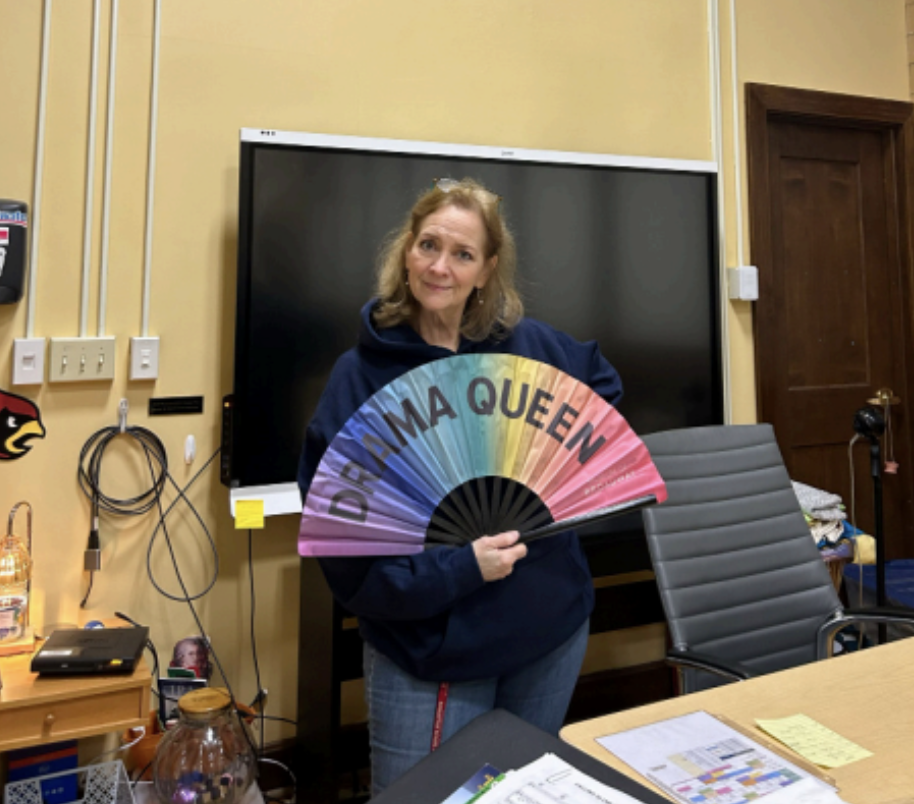











While everyone focuses on how students juggle their schedules, we often overlook the ways teachers and faculty manage their time, too. Let’s take a deep dive into the life of our very own Ildikó Miller, who seems to do it all. Ildikó Miller, the Upper School Dean of Students, likes planning out her day. Upon arriving at 7:30 a.m., she uses the next 20 minutes to check emails and outline her daily schedule, giving her a clear understanding of what to expect. After that, Mrs. Miller will manage all student incidents regarding
health, lateness, or injury. This includes processing and responding to related messages, as well as communicating student absences
to the appropriate teachers.
Once classes have started, Mrs. Miller takes ten to fifteen minutes to draft her agenda and to-do list for the day, a daily ritual she values for focus and clarity. She conducts wellness checks on sick or injured students to provide necessary support and help them manage missed schoolwork. After everything is up and running, Mrs. Miller will begin checking off tasks on her to-do lists. She finds them a great way to organize her day and remember what to accomplish.
At 9 a.m., she does morning attendance, and most days at 3 p.m., she will have meetings with teachers and faculty. Mrs. Miller teaches math for six days of the seven-day cycle, and she also attends agenda meetings every Day Four. She sponsors many clubs, including Spikeball Club and Quaker Life Club.
At home, she has two dogs, one being a seven-month-old. She likes to go on 4-mile walks with her family and dogs, and also watch sports games all together. A lot of her family time is spent with her dogs and playing with them. Everyone knows that 7-month-old puppies can take up a lot of time and effort. She said, “Organization is key.” She believes that great ways for students to organize their time are to use agendas, to-do lists, the assignment center, Post-it notes, and whatever else works. Over 50% of responses in a poll of fifteen people reported that writing things down in an agenda or planner helps them remember tasks and events more easily. Kate Weigand ‘29 says, “I like to fill out my planner with assignments, and I also make re-
minders on my phone sometimes if I have something coming up, like an appointment.”
Another way students like to organize themselves is by using digital resources because most of the time they have an electronic device with them that can remind them of events and tasks. 13% of the poll said that they like to use either the assignment center or a digital calendar. Charlie Kurz ‘27 likes to use the assignment center because he is constantly checking it throughout the day. Kurz ‘27 says, “It is very reliable; most of the time, teachers are very good about making sure to put assignments on it.” He also likes to find time during school, such as free periods, where he can get his work done. He does this so he does not have to stress out about it after school and out-of-school activities.
On the other hand, Juliette Hughes ‘28 likes using both the digital assignment center and an in-hand planner. Hughes ‘28 says, “The planner is helpful for scheduling and [reminds me] when to do long-term assignments and study for tests, and the assignment center helps [me] know when things are due and more like homework.” A lot of people enjoy using both an agenda and a digital organization tool.
Many students and teachers enjoy just writing things down on a to-do list so they can keep track of what tasks are completed or not, while other students just rely on remembering. Despite their separate roles, students and faculty organize in very similar ways.
Mrs. Miller likes using agendas and to-do lists, while some other students like to use
memorization or alarms on their devices.