














Through the end of 2025 and into early 2026, the Trump Administration took aggressive action against Venezuela. Starting in
January 2025, the Trump Administration ordered several bombings of Venezuelan civilian ships, resulting in numerous civilian casualties.
Starting on September 2, 2025, the United States began coordinated strikes on Venezuelan boats alleged to be smuggling drugs. The last reported strike was on December 31, 2025. Over these months, there were 107 confirmed fatalities, two injured survivors, and six strikes without a released casualty count.
The Trump Administration and Republican members of Congress have continued to withhold official information and imagery regarding the bombings, and none of the boats that were attacked were ever proven to be carrying drugs. Emily
Rissolo ‘26 comments that, “Transparency did not exist at all” within the current American government.
Several countries, in response to these strikes, have urged the United States to halt attacks immediately, and the Democratic Congress continues to attempt action against the continuation of violence. Maya Dobson ‘28, an American History student, says that “Trump’s actions weren’t even diplomatic, just aggressive.”
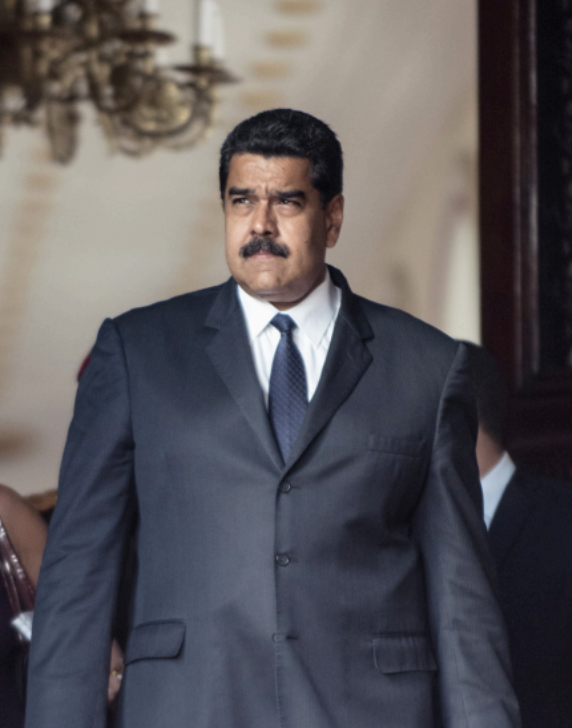
Despite such concerns, the Trump Administration, on January 3, 2026, illegally captured the Venezuelan president, Nicolás Maduro, and his wife, Cilia Flores, at their personal residence. The Trump Administration’s actions have continued to violate several international laws of peace and are being considered by the United Nations’ International Court of Justice.
The U.S. has violated several international laws in its recent actions, including articles of the International Covenant, to which the
U.S. has been a party since 1992. Article 1 of the International Covenant on Civil and Political Rights states the following: “Every human being has the inherent right to life. This right shall be protected by law. No one shall be arbitrarily deprived of his life.” Other than the supposed association between drug cartels and the attacked boats, the civilians on the boats did not commit any action that might constitute a military-sanctioned execution.
The international and national pressure to release evidence of drug cartel involvement, or any evidence that might justify a militant response, falls on deaf ears, with the Trump Administration staying strong in its lack of transparency. As a result, these actions can only be considered a breach of human rights and a war crime against the right to life.
Outside of the International Covenant, the United States also violated Article 2.4 of the UN Charter, which states: “The Charter prohibits the threat or use of force and calls on all Members to respect the sovereignty, territorial integrity and political independence of other States.” This article was directly and without question violated. Yet, the United States then went on to declare itself the acting sovereign of Venezuela and stated its right to manage the Venezuelan oil economy. Dobson ‘28 comments that, “What he (Trump) did was illegal. You can’t just take a person.”
This disregard for international law has been met with disapproval from countries across the world, including severe scorn from senior UN officials In an interview, a UN employee stated, “If tolerated, such actions would normalize lawlessness in international
relations and would fatally undermine the global order,” highlighting the true severity of the United States’ violations.
The United States’ actions demand counteraction to maintain international peace, but what will this counteraction look like? The United States’ domestic law excuses members of the Trump Administration from prosecution after the installation of the law: “The executive branch maintains that the president has the constitutional authority to use military force without congressional authorization, so long as it supports U.S. interests…” This, therefore, overrides the original law requiring the president to obtain congressional approval for military action, provided that the action supports the United States’ interests.
Because the Trump Administration now argues that the operations in Venezuela were primarily based around the oil business, these actions are now not criminal within the United States’ borders. However, international law is not as forgiving. Under UN clauses on a country experiencing aggression by a larger power, if Venezuela were to act aggressively in retaliation, its actions would be considered self-defense. Under the principles of self-defense, Venezuela’s future use of force would then be recognized as lawful by the International Court of Justice, unlike the United States’ own actions.
In addition, many countries could issue arrest warrants for members of the Trump Administration. As a result, members of the Trump Administration would be limited from leaving the United States. If they were to enter another country, they would not be under the protection of domestic law and could be tried and imprisoned for war crimes.
While international arrest warrants are probable, the UN is taking direct actions now. The UN has recently urged countries around the world to impose sanctions on the United States and limit interactions. Donald Morton, the Global Politics teacher at Wilmington Friends Upper School, comments, “Because the U.S. holds veto power on the Security Council, any binding resolution condemning or sanctioning U.S. actions is unlikely to pass.”
Ultimately, given the United States’ veto power within the UN and its worldwide influence, it is unlikely that any foreign country will take aggressive action against the United States. “America is one of the world’s biggest superpowers,” says Dobson ‘28. International arrest warrants, actions, and trade options are the most likely forms of retaliation countries are likely to enforce. Of course, the Trump Administration, and so the United States, has committed several severe war crimes and has remained one of the least transparent Administrations in United States history. Rissolo ‘26 went as far as to describe the Trump Administration as “not even trying (to be transparent).”
If aggression continues towards Venezuela in addition to already committed crimes; however, to support international peace and lawfulness, citizens of the United States should be prepared for significant economic and safety impacts, since Mr. Morton comments that “Meaningful restraint would more likely come from internal pressures such as congressional oversight, public opinion, economic
consequences, or strategic recalculation rather than from external condemnation alone.”

