





















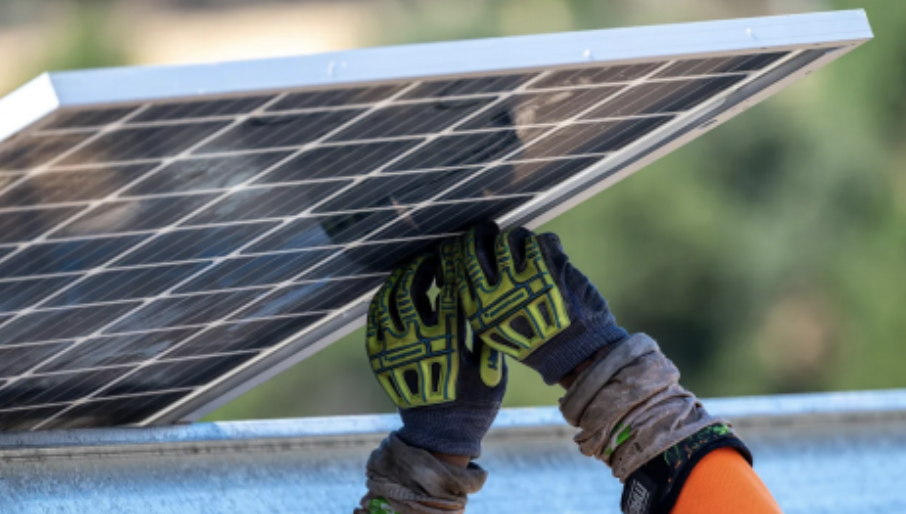
The Trump administration has officially ended the Solar for All program, a $7 billion federal initiative designed to provide solar energy to at least 900,000 lower-income households. In July 2025, Trump signed the One Big Beautiful Bill Act (OBBA) into law, which repealed Biden’s $27 billion Greenhouse Gas Reduction Fund (GGRF), the central source of funding for Solar for All.
On August 7, the Environmental Protection Agency (EPA) Administrator Lee Zeldin declared the end of Solar for All in a statement posted on X (formerly Twitter). “Today, the Trump EPA is announcing that we are ending Solar for All for good, saving US taxpayers
ANOTHER $7 BILLION!” Zeldin wrote. The announcement voided 60 grants that had been issued to states, tribes, and local organizations.
While the administration maintains that the repeal of the GGRF left no legal authority to continue the program,
critics argue that grants already assigned should not be canceled. The termination has disrupted many projects nationwide. For instance, Michigan was preparing to launch $156 million in solar initiatives when the money was pulled. Texas lost even more, as it had $250 million planned for solar energy projects.
The abruptness of the revocation has caused confusion and chaos.
Whether the EPA has the authority to cancel already-issued grants will likely be tested in court. Many state officials have already suggested that lawsuits are possible, arguing that their awards were fully granted before the repeal and therefore still valid. Connecticut, in particular, claims its $62 million Solar for All grant was legally binding as of mid-2024.
Democratic members of Congress have expressed their opposition to the cancellation of the program. Rhode Island Senator Sheldon Whitehouse, the top Democrat on the Senate Environment Committee, called the elimination of Solar for All a betrayal and stated that it will be detrimental to electricity cost and function. Meanwhile, the Trump administration has defended the decision as part of its effort to promote fossil fuels and pursue “energy dominance.” The repeal of Solar for All is consistent with a series of deregulatory measures carried out by the administration related to federal rules that protect clean air and water, as well as renewable energy projects. Critics argue that the decision will not only stall America’s transition to clean energy but also leave vulnerable communities
behind. Corey Solow, the legislative director for Climate and Energy at the nonprofit Earth justice, said, “Instead of focusing on cost-saving investments, the Trump EPA is keeping those communities reliant on pollutant, fossil energy”.
Environmental justice advocates emphasize that the cancellation disproportionately affects disadvantaged communities. Solar for All was specifically designed to bring benefits to neighborhoods that have historically been disproportionately affected by the impacts of climate change. Ms. Caitlin Norton, a biology teacher at WFS, said, “I think the government should be investing in clean energy programs like this as they have the potential to lower energy bill costs and provide jobs for many people, specifically those of low-income.”
The reaction has not been limited to lawmakers and advocacy groups. Many state governments and non-profits that had already begun outreach for Solar for All projects now find themselves scrambling. Local organizers in states like North Carolina and Illinois reported that they had already hired staff and engaged the community, only to have their funding revoked with little warning. For these groups, the loss is not only financial but also a setback in building trust with the communities they serve.
While many communities are facing hardships after the program’s cancellation, the fight is far from over. Several states are exploring alternative funding options to keep solar projects moving forward. Meanwhile, legal challenges could determine whether the federal government needs to issue the grants that it clawed back after the cancellation.
As the political battle continues, it is becoming more apparent that the future of clean energy programs like Solar for All depends not only on federal decisions but also on local leadership and public advocacy. Even the voices of students and youth can make a difference. Sara Clothier ‘26 said, “I think that people our age need to educate themselves and others about climate change, since
the state of our world is at stake.”
The cancellation of Solar for All raises pressing questions about national priorities. Should the government continue investing in renewable energy, or should it prioritize short-term cost savings and fossil fuel expansion? For now, the Trump administration has made its voice clear. Whether that choice stands will depend upon the courts, Congress, and the collective voices of those determined to keep clean energy accessible for all.

